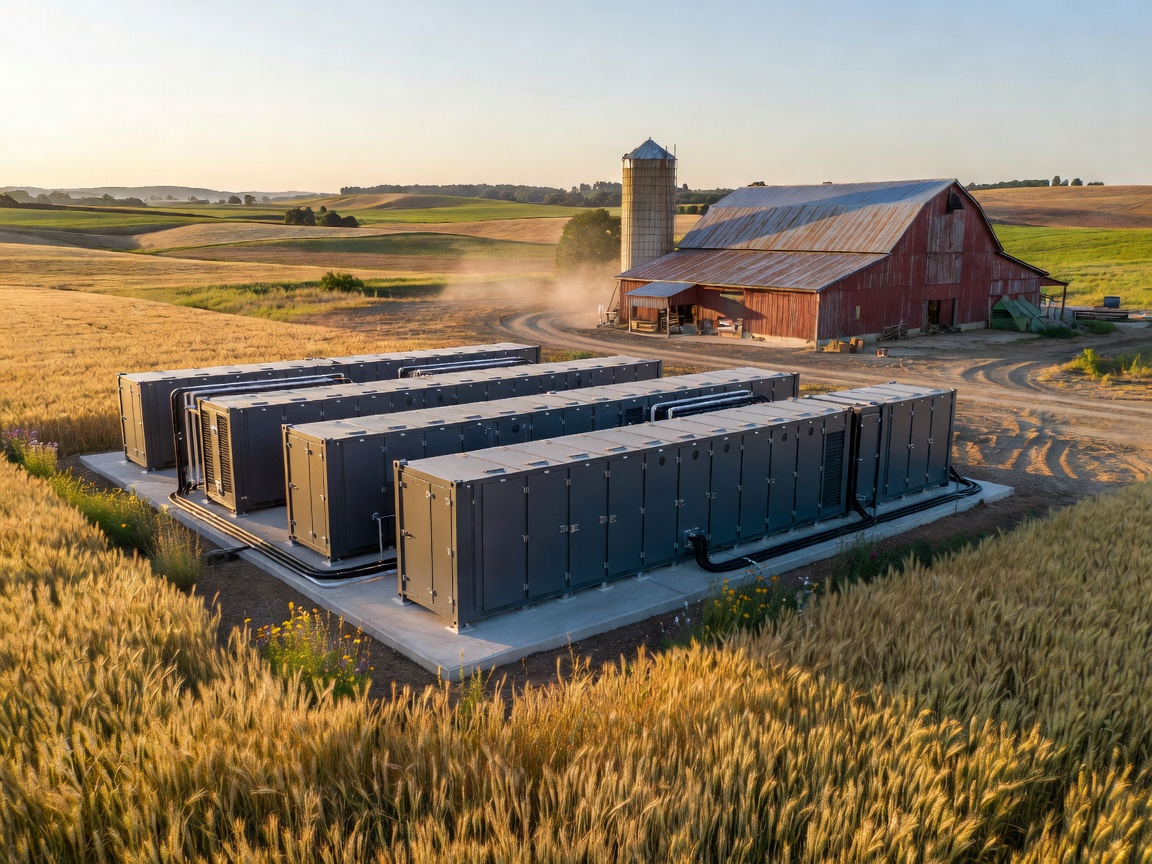
A battery can shift energy from one period to another, but its value depends on when energy is available, when the farm needs it and what the system is permitted to do. The operating profile should come before equipment selection.
Generation versus demand
Solar generation commonly follows daylight while farm demand may follow milking, pumping, cooling, refrigeration, ventilation or processing schedules. Storage can be considered where these profiles do not align. It may also be discussed alongside demand management or continuity planning, subject to system design and local requirements.
Capacity describes how much energy can be stored. Power describes how quickly it can be delivered. Operating duration, reserve requirements, cycling pattern and control strategy add further dimensions. A larger nominal capacity is not automatically the right answer.
What to assess
- Daily and seasonal demand timing
- Generation profile and export position
- Critical and non-critical loads
- Required power and operating duration
- Expected cycling pattern
- Equipment location and access
- Temperature and environmental exposure
- Monitoring and communications
- Maintenance access and records
- Emergency and safety arrangements
Location and operating conditions
Storage equipment needs a suitable location with attention to temperature, moisture, dust, ventilation, access, separation and protection from impact. Agricultural environments can be demanding. The design must follow the equipment manufacturer’s procedures and applicable local requirements.
Monitoring should make the system’s status, alarms and operating history understandable to the responsible operator and service team. Maintenance planning should identify inspection, service access, replacement considerations and what happens when equipment is unavailable.
Safety boundary
Battery systems contain stored electrical energy and may present fire, electrical and environmental hazards. Do not modify batteries, bypass controls, open equipment, work on live systems or attempt wiring based on online instructions. Design, installation, commissioning and maintenance should be handled by appropriately qualified professionals using manufacturer procedures and current local requirements.
Advantages and limitations
Storage may improve the use of on-site generation, support selected timing objectives or provide a defined role in a wider energy plan. It adds capital equipment, controls, space, maintenance and end-of-life considerations. Battery degradation, temperature, cycling and operational changes can affect the long-term result. Any financial or performance assessment must be specific to the proposed system and site.
Short checklist
- Map generation and demand by time period.
- Separate critical loads from flexible loads.
- Define the intended storage service.
- Review location, environment and access.
- Use qualified professionals for all technical work.
Related decisions
Storage should follow a load assessment and may connect with solar planning. Review efficiency opportunities before sizing infrastructure.
Define the storage question.
Tell us whether the priority is timing, resilience, generation use or future planning.
Contact the team