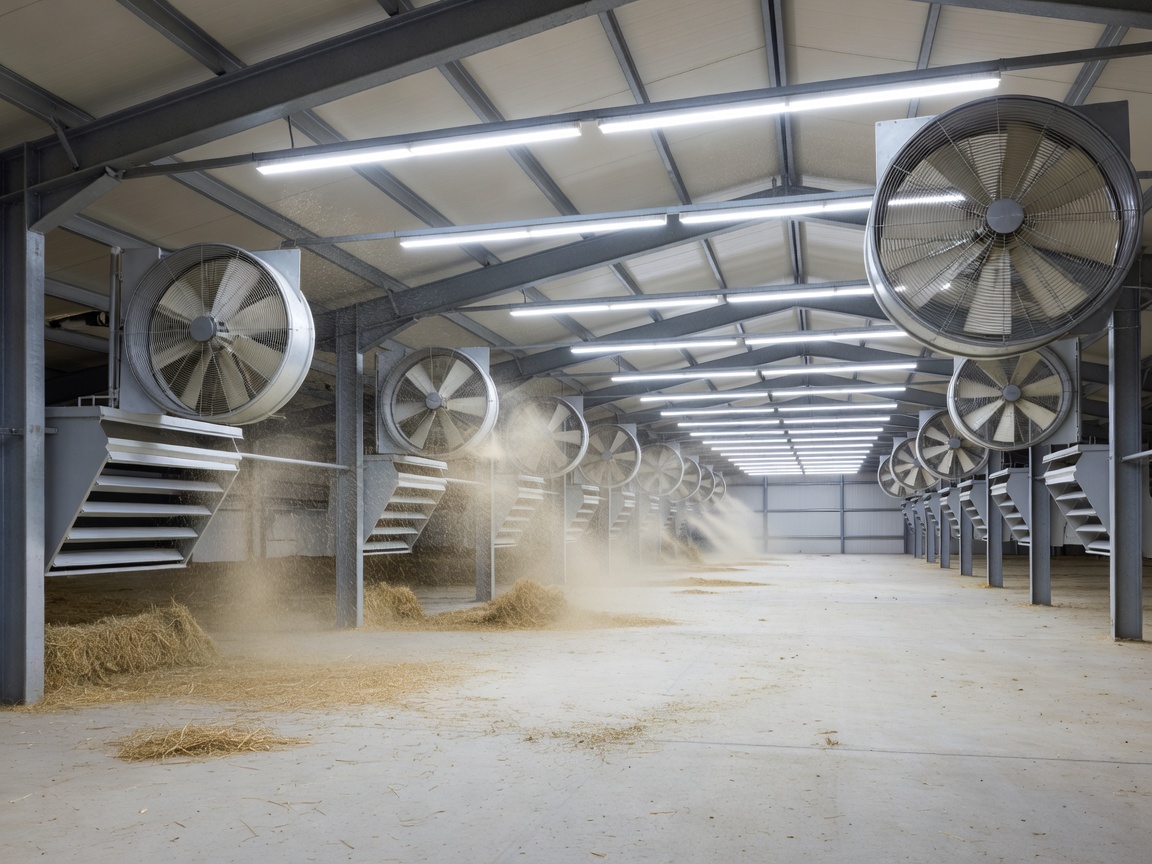
Agricultural energy efficiency is not one technology. It is the combined effect of equipment condition, controls, building performance, operating routines and the service the farm needs from each system.
Review the main load groups
Lighting should be considered alongside occupancy, switching patterns, working conditions and maintenance access. Motors and pumps should be reviewed for duty, control, sizing and operating hours. Ventilation, heating and cooling must preserve the required environment rather than simply reduce runtime.
Refrigeration requires attention to set points, door use, heat rejection, maintenance and load timing. Building envelope performance can affect heating and cooling demand. Workshops and processing areas may have short but significant loads. The assessment should record what each system does, not only its nameplate.
Equipment upgrades versus operational improvements
An equipment upgrade can provide a clear technical change and may be appropriate when existing assets are inefficient, unreliable or near replacement. It can require capital, downtime, compatibility checks and disposal planning. The result depends on the actual duty cycle and operating conditions.
An operational improvement may involve scheduling, control settings, maintenance routines or staff practice. It can be quicker to test and less disruptive, but may depend on consistent adoption. It may also be limited where the process has little flexibility or where the equipment is already well controlled.
What to assess
- Lighting hours and switching zones
- Motor and pump duty cycles
- Fan controls and ventilation demand
- Heating and cooling set points
- Refrigeration condition and access
- Building envelope and air leakage
- Maintenance records and faults
- Scheduling and process flexibility
- Metering and sub-metering options
- Staff interfaces and control clarity
Controls need context
Automation can help coordinate equipment, but a control system must remain understandable to operators. Poorly documented controls can hide faults or create a new maintenance burden. Any change should account for animal welfare, crop conditions, product quality, worker safety and continuity of operation where relevant.
Advantages and limitations
Efficiency work can reduce unnecessary demand and improve the quality of information available for renewable planning. It may also extend equipment life when paired with maintenance. However, no generic saving percentage should be applied. Results vary with baseline condition, operating hours, weather, process requirements and user behaviour.
Short checklist
- List major loads and their duty cycles.
- Separate maintenance issues from replacement cases.
- Identify flexible schedules and fixed processes.
- Check whether controls are documented and usable.
- Measure before and after changes where appropriate.
Related decisions
Start with a farm energy assessment. Efficiency findings can change solar sizing and storage requirements. Put the measures into a wider energy plan.
Find the practical first move.
Describe the building, equipment and operating issue. We will help organise the assessment questions.
Contact the team